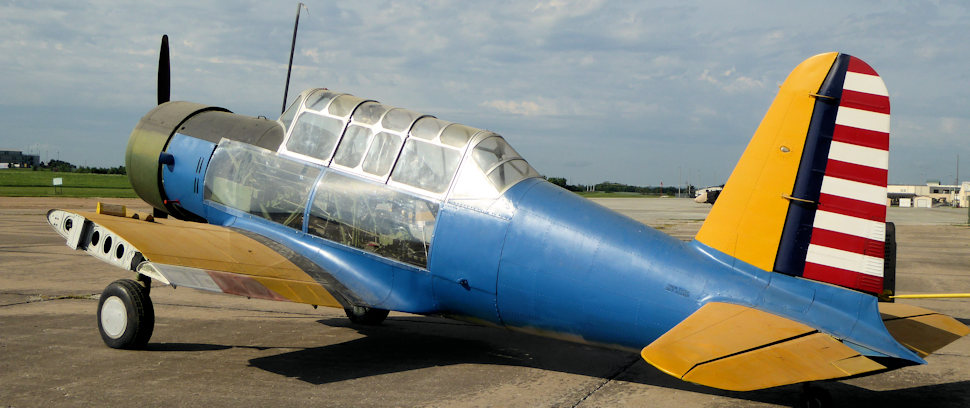
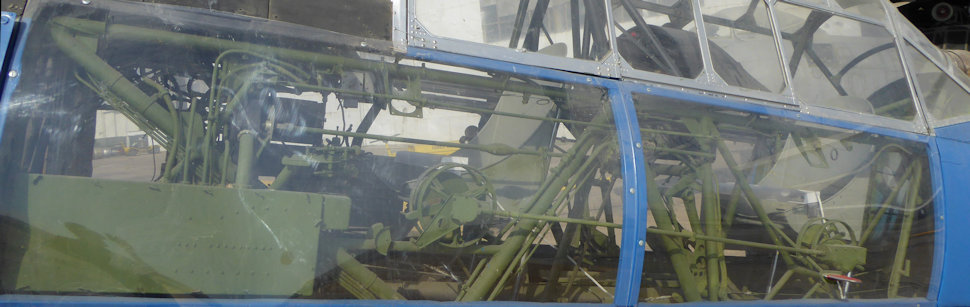
Known
to its student pilots as the “Vultee Vibrator,” thousands
of Army Air Corps, Navy, and Marine Corps aviation cadets flew the
BT-13 series aircraft during World War II as the next step in their
pilot training after primary instruction. The Navy designation for
the BT-13 was SNV.
The
BT-13 was similar to Vultee’s Basic Combat trainer, the
BC-51/BC-3, developed in the late 1930’s but never placed
into production. The BT-13 had fixed landing gear and used a
smaller engine
than the BC-51/BC-3.
After the initial production of 300 BT-13s, Vultee built the improved
BT-13A (SNV-1) (he BT-13A was produced to the extent of 7,057 aircraft) followed by the BT-13B (SNV-2) with a 24 volt electric
system and other minor changes. Vultee delivered a total of 9,833 all BT-13/SNV types
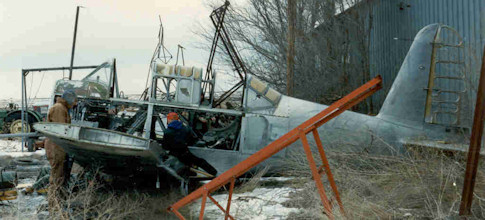
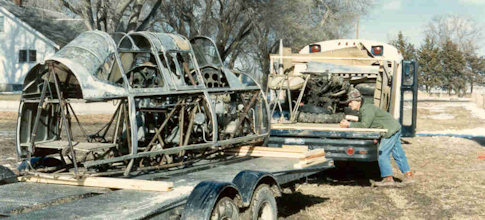
to the Army and Navy between1940 -1944. This particular plane, 41-11584 was assigned to the AAF Training Command at Luke auxilliary Field (previously Echeverria Field), Wickenburg in Arizona, Nov 13, 1944. The rest of its history is unknown.